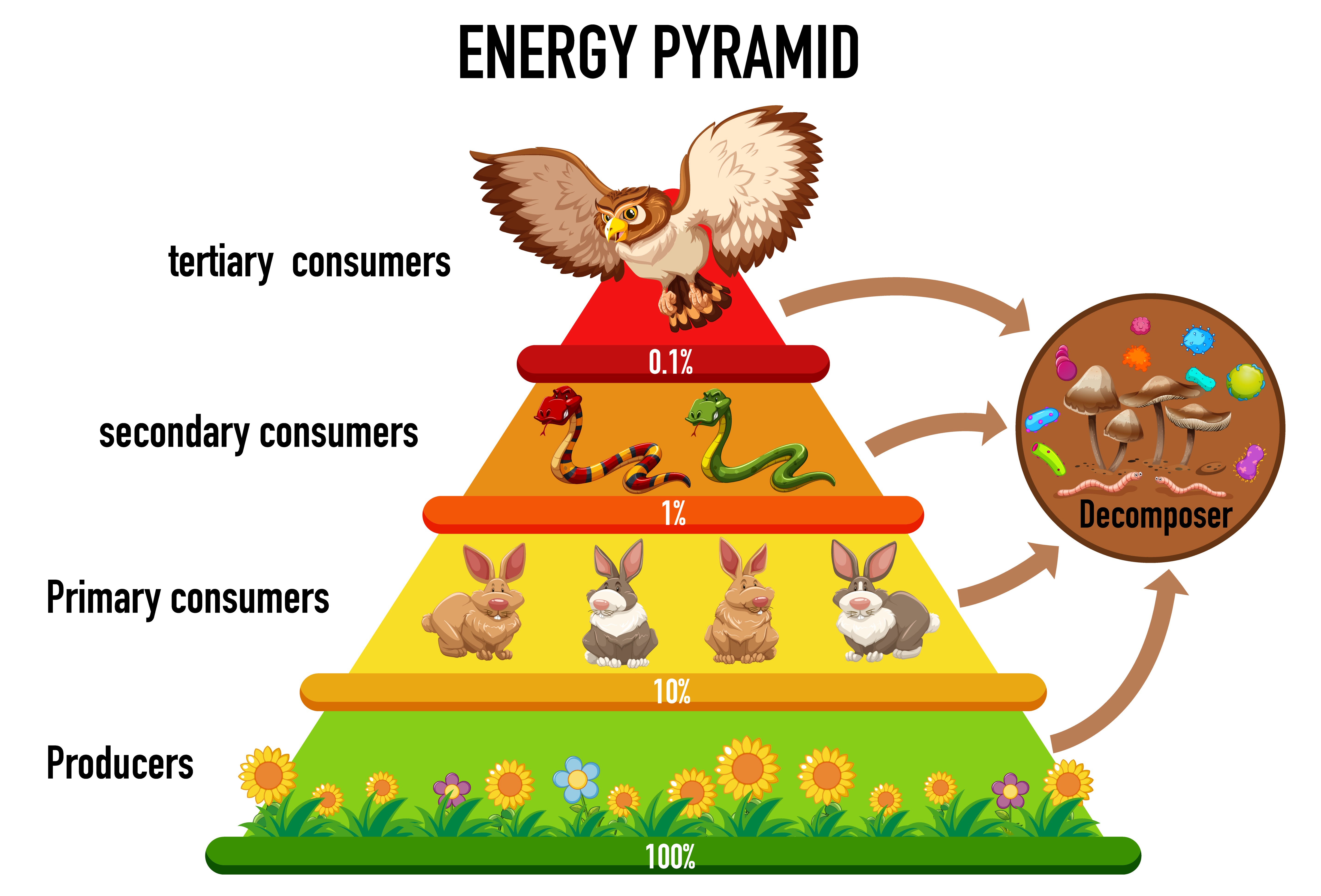
The concept of the energy pyramid is one of the most important ideas in ecology. It shows how energy flows through different levels of an ecosystem. Every living thing on Earth depends on energy. The way energy moves and is transferred among organisms shapes the structure and function of ecosystems around the world.
Understanding the energy pyramid helps us see why plants are essential, why large predators are fewer in number, and how human actions can affect the delicate energy balance of nature. The pyramid shows that energy is lost at each level, meaning that only a small amount of energy is passed up the chain from one level to the next.
What Is an Energy Pyramid
An energy pyramid is a visual model that shows how energy flows through different feeding levels in an ecosystem. It is usually shaped like a triangle or pyramid because energy decreases as it moves upward from producers to consumers. The bottom of the pyramid represents producers, such as green plants, that capture energy from the sun. The next levels show consumers, including herbivores, carnivores, and top predators.
Each level of the energy pyramid is called a trophic level. The word trophic comes from a Greek word meaning nourishment. The first level always consists of producers. Above them are primary consumers, followed by secondary consumers, tertiary consumers, and finally apex predators. At every level, energy is used up by the organisms for growth, movement, and survival.
The Structure of an Energy Pyramid
The energy pyramid typically has four to five trophic levels, each representing a group of organisms that share the same role in the flow of energy. The amount of energy available at each level decreases dramatically from bottom to top. This happens because when organisms use energy for living processes, most of it is lost as heat. Only about ten percent of the energy from one level is passed to the next.
| Trophic Level | Type of Organism | Energy Source | Example |
|---|---|---|---|
| 1 | Producers | Sunlight | Grass, Algae, Trees |
| 2 | Primary Consumers | Plants | Rabbits, Deer, Zooplankton |
| 3 | Secondary Consumers | Herbivores | Frogs, Small Fish, Foxes |
| 4 | Tertiary Consumers | Carnivores | Snakes, Hawks, Sharks |
| 5 | Apex Predators | Other Animals | Lions, Killer Whales, Eagles |
Why Energy Decreases Up the Pyramid
The reduction of energy from one level to the next is known as the ten percent rule. When an organism consumes another, most of the energy it obtains is used for vital activities such as respiration, digestion, and reproduction. Only a small fraction remains stored in the body tissues and can be transferred to the next consumer. Because of this, there is much less energy available to organisms higher up the pyramid.
This decrease in energy explains why food chains rarely have more than five trophic levels. If there were more, not enough energy would remain to support the organisms at the top. It also explains why large carnivores are fewer and need larger territories or greater amounts of food.
Producers: The Foundation of the Energy Pyramid
Producers form the broad base of the energy pyramid. They are the only organisms capable of converting sunlight into chemical energy through photosynthesis. This energy is stored in the form of glucose and becomes the source of energy for all other living organisms.
Examples include grasses in a savanna, algae in aquatic systems, and trees in a forest. Without producers, no energy would enter the ecosystem, and life as we know it would not exist.
Consumers: The Movers of Energy
Consumers depend on other organisms for food. They play an important role in transferring energy through the ecosystem. Primary consumers are usually herbivores that feed directly on plants. Secondary consumers eat herbivores, while tertiary consumers eat smaller carnivores.
At the top are the apex predators. They have no natural enemies and help keep the populations of other species in balance. Even though they receive the least energy from the pyramid, they are essential for ecosystem stability.
Decomposers and the Recycling of Energy
Decomposers are often not shown in a traditional energy pyramid, but they play a vital role in returning nutrients to the environment. Bacteria, fungi, and detritivores such as worms break down dead material and waste. This process releases energy stored in organic matter back into the soil and air, supporting the growth of producers again.
Energy Pyramid Examples in Nature
A simple example can be seen in a grassland ecosystem. Grass captures energy from the sun. Rabbits eat the grass, snakes eat the rabbits, and hawks eat the snakes. At every step, most of the energy is lost, leaving only a small fraction available to the hawk.
In the ocean, phytoplankton serve as producers. Zooplankton feed on phytoplankton, small fish eat zooplankton, and larger fish or whales eat smaller fish. The same energy flow pattern applies to all ecosystems on Earth, whether on land or in water.
Energy Pyramids and Human Impact
Human activities can disturb the balance of the energy pyramid. Overfishing, deforestation, pollution, and excessive hunting can remove entire levels from the pyramid, causing ecological collapse. For instance, when large predators disappear from an ecosystem, the populations of prey species can grow uncontrollably, which then affects plants and soil quality.
Agriculture and industry also consume large amounts of energy. The conversion of natural habitats into farmland reduces the energy available to wildlife. Using fossil fuels releases energy stored over millions of years but also alters the climate and disrupts natural cycles.
The Importance of the Energy Pyramid in Ecology
The energy pyramid is not only a scientific diagram. It is a reminder that energy is limited and must be conserved. Each organism plays a role in maintaining the balance. Protecting producers, conserving habitats, and managing human energy use are ways to keep ecosystems healthy.
Studying the energy pyramid helps scientists predict how ecosystems respond to changes. It can reveal how pollution, invasive species, or climate shifts affect the flow of energy. This knowledge is essential for conservation and sustainable development.
How Energy Flow Connects All Life
Every living being depends on energy. The sun provides this energy to plants, which pass it on to animals, and finally to decomposers that return it to the soil. This endless cycle connects all life. Even humans are part of it. When we eat fruits, vegetables, or meat, we are tapping into the same pyramid that sustains every other organism.
Conclusion: Lessons from the Energy Pyramid
The energy pyramid shows that life depends on the efficient use of energy. The loss of energy at each level means that the most productive and sustainable ecosystems are those that protect producers and ensure balanced food chains. Humans have a responsibility to maintain this balance by conserving energy, protecting nature, and supporting biodiversity.
Understanding how energy moves through ecosystems is a foundation for solving environmental challenges. Whether managing forests, oceans, or farmlands, respecting the rules of the energy pyramid helps sustain life on Earth.